
Ultimate Guide to Choosing the Perfect Wedding Reception Venue for Your Dream Wedding Day
Choosing your wedding reception venue is one of those decisions that suddenly makes the whole day feel real.
You can talk about flowers, menus, first dance songs, and color palettes for months — but once you walk into the right room, barn, ballroom, estate, tented lawn, or seaside space, you can usually picture it. You start imagining where your guests will gather, where dinner will happen, where the band will set up, and where everyone will be dancing by the end of the night.
Of course, finding that place is not always simple. New England couples have no shortage of beautiful wedding venues to consider, from classic Boston hotels and historic estates to coastal venues, private clubs, museums, vineyards, and backyard tented receptions. The challenge is figuring out which venue actually fits your guest count, budget, style, and the kind of celebration you want to have.
This guide walks through the biggest things to think about before you sign a contract, including guest capacity, location, pricing, restrictions, logistics, and entertainment needs.
Start With the Kind of Wedding You Want
Before you start touring venues, take a little time to talk through the overall feel of your wedding.
Do you picture a black-tie evening in a grand ballroom? A relaxed summer celebration by the water? A tented reception at a family home? A cozy winter wedding with candlelight and a packed dance floor?
Your wedding style will narrow your venue search quickly. A formal city wedding may call for a hotel, club, museum, or elegant event space. A more laid-back celebration might feel better at a coastal venue, farm, private estate, or garden setting.
It helps to ask yourselves:
- Do we want the ceremony and reception in the same place?
- Are we imagining indoor, outdoor, or a mix of both?
- Do we want a formal seated dinner, stations, buffet, or cocktail-style reception?
- Is dancing a major priority?
- Do we want the venue to feel classic, modern, rustic, coastal, romantic, or relaxed?
You do not need every detail figured out before you look. But having a general direction will save you from wasting time on venues that were never really going to fit.
Choose a Date — or at Least a Season
Your wedding date plays a huge role in venue availability. Popular venues, especially in and around Boston, Cape Cod, Newport, the North Shore, and Martha’s Vineyard, can book well in advance.
If you have one specific date in mind, start your search as early as possible. If you are flexible, you may have more options and possibly more favorable pricing.
Many venues offer better availability or lower minimums for:
- Fridays
- Sundays
- Weekdays
- Winter weddings
- Early spring dates
- Late fall dates
- Off-peak months
If the venue matters more to you than the exact date, ask what dates they have open within your preferred season. Sometimes shifting by a week or choosing a Friday instead of a Saturday can make a dream venue much more realistic.
Build a Shortlist Before You Tour
It is easy to fall down the rabbit hole of wedding venue research. Every space starts to look beautiful online, and before long, you have 35 browser tabs open and no idea where to begin.
Start with a practical shortlist. Look for venues that match your:
- Approximate guest count
- Budget range
- Preferred location
- Wedding style
- Date or season
- Ceremony needs
- Reception flow
- Entertainment requirements
Read reviews, browse real wedding galleries, and check social media posts that tag the venue. Professional photos are helpful, but candid guest photos and vendor posts often give you a better sense of how the space really feels during an event.
Once you have a solid list, schedule tours. Seeing a venue in person is completely different from viewing it online. Pay attention to how you feel when you arrive, how the rooms connect, how the staff communicates, and whether you can imagine your guests moving comfortably through the space.
Think About Guest Comfort, Not Just Capacity
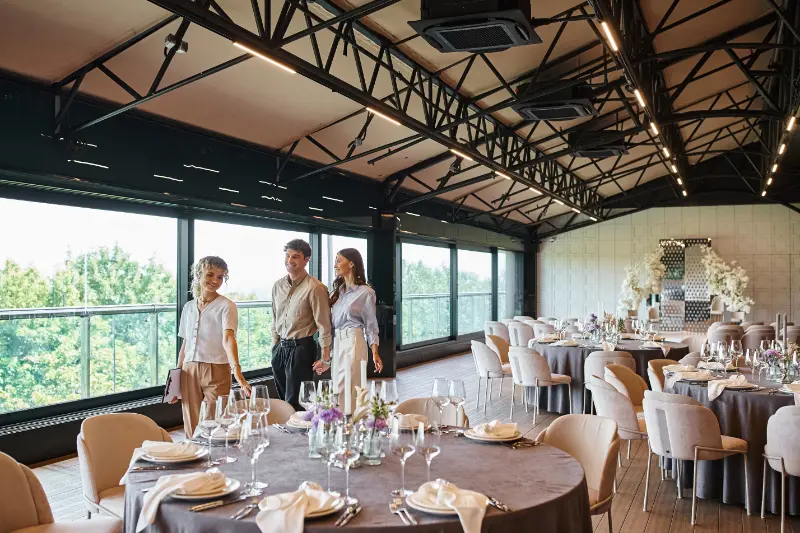
Venue capacity can be a little misleading. A room may technically hold 180 guests, but that does not always mean 180 people will feel comfortable once you add tables, a bar, a dance floor, a band, a photo booth, a dessert station, and space for servers to move around.
When you tour, ask to see floor plans for weddings close to your guest count. If you are planning to have live music, make sure there is enough room for the band, sound equipment, and a dance floor that does not feel like an afterthought.
A few questions worth asking:
- What is the comfortable seated capacity?
- How many guests fit with a dance floor?
- Where does the band or DJ usually set up?
- Is there a separate cocktail hour space?
- Can older guests easily move between areas?
- Is there enough room for dinner service?
- Will the room feel too empty if our guest count is smaller?
The best venue is not always the biggest or most dramatic. It is the one that lets the night flow naturally.
Location Matters More Than Couples Sometimes Realize
A beautiful venue still needs to make sense for the people attending your wedding.
If many guests are traveling, consider nearby hotels, transportation options, parking, and how easy the venue is to find. If your ceremony is in one location and the reception is in another, think through the drive time and whether guests will need clear directions or shuttles.
For city weddings, parking and ride-share access can be major factors. For coastal, estate, or private property weddings, transportation and timing become even more important.
Ask yourself:
- Will guests need hotel blocks nearby?
- Is parking available?
- Are shuttles recommended or required?
- Is the venue easy to access for older relatives?
- Is there a clear rain plan for outdoor spaces?
- Are there noise restrictions because of the location?
These details may not feel exciting during planning, but they have a big impact on the guest experience.
Ask About Music and Entertainment Restrictions Early
This is a big one, especially if dancing and live music are important to you.
Not every venue has the same rules around entertainment. Some have strict sound limits. Others require music to end at a specific time. Some outdoor venues have different rules for amplified music after a certain hour. Historic properties, hotels, clubs, and residential-area venues may all have their own guidelines.
Before you book, ask:
- Are live bands allowed?
- Are there sound restrictions or decibel limits?
- What time does music need to end?
- Are there restrictions on outdoor music?
- Where does the band or DJ typically set up?
- Is there enough power for a full band?
- Is a stage available or required?
- Are load-in and load-out times limited?
- Does the venue require vendors to provide insurance?
If you already know you want a high-energy band, do not leave this conversation until after the contract is signed. The right venue should be able to support the kind of party you want to have.

Understand What Is Included in the Venue Package
Venue pricing can vary widely, and the number on the first proposal does not always tell the full story.
Some venues include tables, chairs, linens, catering, staffing, bar service, china, glassware, setup, breakdown, and coordination. Others are more of a blank slate, which means you may need to bring in rentals, catering, lighting, restrooms, generators, transportation, and additional staff.
Neither option is automatically better. You just need to know what you are comparing.
Ask each venue:
- What is included in the rental fee?
- Is catering in-house or can we bring our own caterer?
- Are tables, chairs, linens, china, and glassware included?
- Are there food and beverage minimums?
- Are there service charges, taxes, or administrative fees?
- What is the deposit schedule?
- What is the cancellation policy?
- Are there overtime fees?
- Are security, coat check, valet, or additional staffing required?
- Are there extra costs for ceremony setup?
When comparing venues, create a realistic total estimate instead of looking only at the rental fee. A venue with a higher initial price may actually be more cost-effective if it includes more.
Pay Attention to the Flow of the Night
A wedding reception has a rhythm: guest arrival, cocktail hour, introductions, dinner, toasts, first dance, parent dances, open dancing, cake cutting, late-night snacks, final song.
The venue should support that rhythm without awkward bottlenecks or constant room flips.
During your tour, ask how weddings usually unfold in the space:
- Where do guests go first?
- Where is cocktail hour held?
- Is dinner in the same room as dancing?
- Does the band set up before guests enter?
- Will guests need to move from one building or floor to another?
- Is there a backup plan for weather?
- Where will toasts happen?
- Is the bar close enough to the dance floor?
- Is there a private space for the couple or wedding party?
A gorgeous venue can still create a clunky experience if guests are constantly being moved around or if the dance floor is tucked away from the main energy of the room.
Consider Whether a Wedding Planner Would Help
If you are busy, planning from out of town, or looking at venues with a lot of moving parts, a wedding planner can be a huge help.
Planners know which venues are organized, which ones require extra rentals, which ones are strict about timing, and which ones are easier to work with behind the scenes. They can also help you compare proposals so you understand the real cost of each option.
If you hire a planner before booking your venue, ask them:
- Which venues fit our guest count and budget?
- Are there any venues we should avoid for logistical reasons?
- Which venues work well with live music?
- What costs might not be obvious in the proposal?
- How much setup and coordination will the venue provide?
- Does this venue match the kind of guest experience we want?
A good planner can help you make a decision with fewer surprises.
Compare Venues Side by Side
After a few tours, the details can start to blur. Take notes immediately after each visit while everything is still fresh.
Create a simple comparison with categories like:
- Guest capacity
- Overall feel
- Location
- Ceremony options
- Cocktail hour space
- Reception layout
- Dance floor location
- Music restrictions
- Food and beverage costs
- Rental inclusions
- Staff responsiveness
- Rain plan
- Parking and transportation
- Total estimated cost
Then rank what matters most. If music, dancing, and guest experience are top priorities, a venue with a better layout and fewer sound restrictions may beat a prettier space with a limited end time.
Trust Your Gut, Too
Spreadsheets are helpful, but your instincts matter.
When you walk through a venue, pay attention to whether it feels like you. Can you imagine your people there? Does the space make you excited? Do you feel comfortable with the staff? Can you picture the band playing, guests dancing, and the room coming alive?
Your wedding venue is more than a backdrop. It sets the tone for the entire celebration.
If a venue checks the practical boxes and gives you that “this feels right” reaction, that is worth listening to.
Before You Sign the Contract
Once you have found your venue, take your time with the contract. Read everything carefully, especially sections related to payments, cancellation, insurance, vendor requirements, timing, food and beverage minimums, entertainment restrictions, and overtime fees.
Before signing, confirm:
- Your exact date and event times
- Ceremony and reception locations
- Setup and breakdown windows
- Payment schedule
- Guest count minimums and maximums
- Included rentals and services
- Catering and bar terms
- Music and sound rules
- End time
- Rain plan
- Vendor insurance requirements
- Any additional fees
If anything is unclear, ask before you sign. A good venue should be willing to walk you through the details.
Make the Reception Feel Like Yours
Once the venue is chosen, the rest of the celebration can start to take shape — the food, the flowers, the lighting, the timeline, and of course, the music.
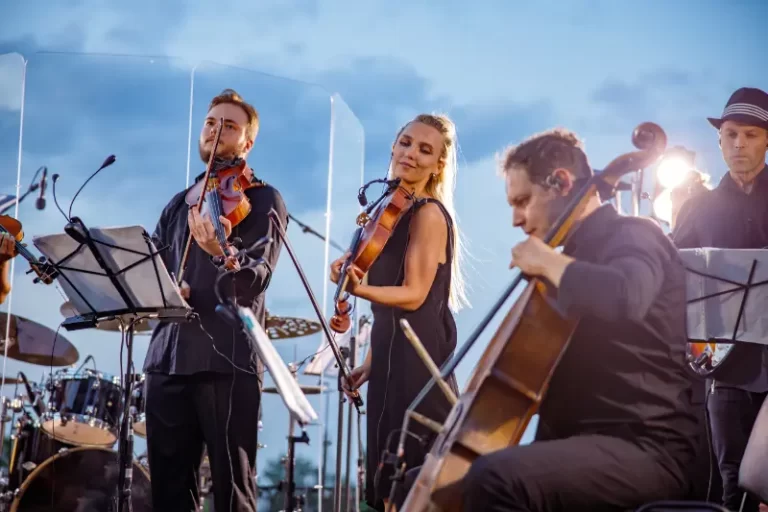
Music has a way of turning a beautiful room into a real celebration. It fills the quiet moments, brings guests together, and gives the night its energy. From ceremony music to cocktail hour, dinner, and a packed dance floor, the right entertainment can make the entire reception feel more personal and memorable.
Why Couples Choose Kahootz Entertainment
Kahootz Entertainment has performed at weddings throughout Boston and New England, helping couples create celebrations that feel polished, personal, and full of energy.
Whether you want elegant ceremony music, a relaxed cocktail hour, a sophisticated dinner set, or a dance floor that stays full all night, the team can help match the music to the mood of your wedding.
Kahootz Entertainment offers several live music options, including:
- Kahootz — a nine-piece band known for high-energy celebrations and a full, dynamic sound.
- K2 — an eight-piece band designed for couples who want a lively, dance-focused reception.
- KB3 — a seven-piece band with a strong party atmosphere and versatile repertoire.
- KTO — a six-piece group ideal for couples looking for a polished, sophisticated sound.
- DJs and DJ + live musician options — great for couples who want flexibility while still keeping the energy high.
- Small ensembles — perfect for ceremonies, cocktail hours, and more intimate gatherings.
The right band or DJ does more than play songs. They help guide the energy of the evening, read the room, and make sure the music supports each part of the celebration.
Frequently Asked Questions About Choosing a Wedding Venue
How early should we start looking for a wedding venue?
Start as early as you can, especially if you want a popular venue or a Saturday date during peak wedding season. Many couples begin looking 12 to 18 months ahead, and some venues book even earlier. If you are flexible with your date, you may have more options.
Should we book the venue before hiring other vendors?
In most cases, yes. Your venue and date usually need to be confirmed before booking major vendors like your band, photographer, florist, and planner. That said, if music is a major priority, it can be helpful to check availability with your preferred entertainment company before finalizing your date.
What should we ask a venue before booking?
Ask about capacity, pricing, what is included, catering rules, payment schedules, cancellation policies, parking, accessibility, rain plans, vendor requirements, sound restrictions, and the event end time. If you want live music, confirm that the venue can comfortably accommodate a band.
How do we know if a venue is right for live music?
Ask where bands typically set up, whether there are sound limits, what power is available, how load-in works, and whether there is enough room for both the band and the dance floor. If possible, ask your entertainment company if they have performed there before.
What if we love a venue but it has an early music end time?
You have a few options. You can start the ceremony and reception earlier, plan an after-party elsewhere, or choose a venue with more flexible timing. Just make sure the timeline still feels natural and gives guests enough time to enjoy dinner and dancing.
Final Thoughts
Choosing your wedding reception venue is a big decision, but it does not have to feel overwhelming. Start with the kind of celebration you want, stay realistic about your guest count and budget, and ask detailed questions before signing anything.
The right venue should feel beautiful, practical, and true to you as a couple. It should give your guests a comfortable experience and give your vendors what they need to bring the day to life.
And when the venue is set, the music can help make the celebration unforgettable.
If live music is part of your vision, Kahootz Entertainment would love to help you create the perfect soundtrack for your wedding day. Contact Kahootz Entertainment to talk through your plans, compare band and DJ options, and find the right fit for your reception.